England’s history is not a straight line from ancient tribes to a modern nation. It is a layered story of changing peoples, languages, kingdoms, faiths, laws, landscapes and identities. Before England existed, the land was shaped by Ice Age hunters, Neolithic farmers, Bronze Age communities, Iron Age societies and Roman imperial rule. England later emerged from the Anglo-Saxon kingdoms, was transformed by Vikings and Normans, fought over monarchy and Parliament, expanded into empire, industrialised earlier than any other country, endured world wars, and became part of a modern, diverse United Kingdom.
England at a Glance
Timeline of English History
Before England: Deep Prehistory and the First People
The history of England begins long before England existed. For hundreds of thousands of years, the land that would become England was part of a changing Ice Age world. Sea levels rose and fell, climates warmed and cooled, and at times Britain was connected to Europe by land. Early humans and later Homo sapiens followed animals, rivers and seasonal resources across landscapes very different from the modern country.
Archaeology rather than written records is our guide to this deep past. Stone tools, bones, footprints and settlement traces show that people lived, hunted and adapted here long before farming, towns or kingdoms. These early communities were not “English” in any modern sense; they belonged to a prehistoric world of movement, survival and environmental change. The later formation of England rested on this much older human story.
Neolithic England: Farming, Ritual Landscapes and Stone Monuments
Around the fourth millennium BC, farming gradually transformed life. Communities cleared land, cultivated crops, kept animals and built more permanent settlements. This shift did not happen overnight, but it changed how people related to the landscape. Long barrows, causewayed enclosures, henges and stone circles suggest societies with complex beliefs, seasonal gatherings and social organisation.
Stonehenge is the most famous monument from this period. English Heritage describes its first monument as an early henge built about 5,000 years ago, with the stone circle erected in the late Neolithic period around 2500 BC. Yet Stonehenge was only one part of a wider sacred and ceremonial landscape. Avebury, Silbury Hill, the stone circles of Cumbria and many less famous sites show that prehistoric England was already a land of engineering, ritual and regional identity.
Bronze Age and Iron Age England
The Bronze Age brought metalworking, new forms of burial, round barrows, field systems, weapons, ornaments and long-distance exchange. Wealth and status became increasingly visible in graves and objects. Communities shaped the land through farming, trackways and defended sites.
The Iron Age saw hillforts, tribal territories, coinage in some regions and growing contact with continental Europe. Classical writers later described peoples and leaders in Britain, but their accounts are partial and external. By the time Rome turned serious military attention toward Britain, southern England already contained organised societies with political leadership, trade networks and complex local cultures.
Roman Britain: Conquest, Towns, Roads and Imperial Power
In AD 43 the Roman conquest of Britain began under Emperor Claudius. Roman authority did not instantly cover every part of the island, but southern and eastern Britain became deeply integrated into the empire. Londinium, the Roman foundation that became London, grew into a major commercial and administrative centre. Roads connected towns, forts and ports; villas and farms supplied markets; and Roman law, money, baths, temples and urban life changed the landscape.
Roman rule also depended on military force and local adaptation. Rebellions such as that of Boudica in AD 60/61 show that conquest was violent and contested. Over time, Romano-British society developed its own blend of imperial and local customs. Christianity arrived in Roman Britain before the end of imperial rule. When Roman authority weakened in the early fifth century, Britain did not simply become empty or chaotic, but the old imperial systems of tax, army and urban administration fractured.
The End of Roman Rule and the Anglo-Saxon World
Around AD 410, Roman imperial rule in Britain effectively ended. The centuries that followed were once called the “Dark Ages,” but they are better understood as the early medieval period. Written sources are scarce, yet archaeology shows change, migration, continuity and conflict. Germanic-speaking groups from regions around the North Sea settled in parts of eastern and southern Britain. Brittonic-speaking communities continued in many areas, especially in the west and north.
Over time, new kingdoms emerged: Kent, Sussex, Essex, East Anglia, Mercia, Northumbria and Wessex among them. Christianity, reintroduced and strengthened through missions from Rome and Ireland, became central to kingship, learning and art. Monasteries produced manuscripts and scholarship. The Sutton Hoo ship burial in Suffolk reveals the wealth and connections of elite Anglo-Saxon society. England’s roots lie in this mixture of migration, adaptation, Christianisation, warfare and kingdom-building.
Vikings, Alfred the Great and the Making of England
From the late eighth century, Viking raids struck monasteries and coastal settlements. In the ninth century, Viking armies conquered and settled large parts of eastern and northern England, creating the Danelaw. The kingdom of Wessex, under Alfred the Great and his successors, resisted, reorganised defence, promoted learning and expanded power.
The idea of a single kingdom of the English emerged gradually. Alfred’s successors, including Edward the Elder and Æthelstan, extended rule across much of the land. Æthelstan is often treated as one of the first kings of a united England after his authority reached across former Anglo-Saxon and Viking territories. Even then, unity was fragile. Later kings faced renewed Scandinavian power, including the reign of Cnut, who ruled an Anglo-Scandinavian empire in the eleventh century.
1066 and the Norman Conquest
The year 1066 is one of the most famous in English history. Edward the Confessor died without a direct heir. Harold Godwinson became king, defeated Harald Hardrada of Norway at Stamford Bridge, then marched south to face William, Duke of Normandy. At the Battle of Hastings on 14 October 1066, Harold was killed and William’s victory opened the way for Norman rule.
The conquest transformed England. Norman castles asserted control. French-speaking elites replaced much of the old aristocracy. Landholding was reorganised, and the Domesday Book of 1086 recorded resources, tenants and obligations with remarkable administrative detail. English language and law survived but changed under Norman and French influence. The monarchy became more centralised, the Church was reshaped, and England became tied more closely to continental politics.
Medieval England: Kingship, Church, Towns and Magna Carta
Medieval England was a society of monarchy, aristocracy, Church, villages, towns and law. Most people lived in rural communities, farming land under obligations shaped by lordship and custom. Towns grew as centres of trade, craft and royal authority. Cathedrals, monasteries and parish churches dominated the physical and spiritual landscape.
Royal power was strong but contested. Henry II developed royal justice and common law. King John’s conflict with barons led to Magna Carta in 1215, a document that began as a political settlement but later became a powerful symbol of lawful limits on authority. Parliament developed gradually from royal councils, taxation negotiations and representation of shires and boroughs. The thirteenth and fourteenth centuries also saw conflict with Wales, Scotland and France, including the long struggle known as the Hundred Years’ War.
Plague, Peasants and Late Medieval Change
The Black Death reached England in 1348 and killed a huge proportion of the population. Its effects were social, economic and psychological. Labour became scarce, wages rose in some places, and attempts to control workers helped create tension. The Peasants’ Revolt of 1381 revealed anger about taxation, labour restrictions and lordship.
Late medieval England was not simply a land of decline. Literature flourished in the age of Geoffrey Chaucer. English increasingly replaced French in law, government and literature. Guilds, merchants and towns gained importance. Yet dynastic conflict later erupted in the Wars of the Roses, a series of struggles between rival branches of the royal house that ended when Henry Tudor defeated Richard III at Bosworth in 1485.
Tudor England: Renaissance, Reformation and Overseas Ambition
The Tudor dynasty reshaped England. Henry VII restored stability after civil war. Henry VIII’s break with Rome created the Church of England and dissolved the monasteries, redistributing land and transforming religious life. The Reformation was not only a theological event; it changed education, art, politics, local charity, landownership and the relationship between crown and subject.
Elizabeth I’s reign saw religious settlement, maritime expansion, drama, music and growing national confidence. Shakespeare, Marlowe and the theatre culture of London belonged to this world. England remained smaller and less wealthy than some European powers, but voyages, privateering, trade companies and colonising efforts pointed toward a wider global role.
Stuart England: Civil War, Republic and Restoration
The Stuart period brought conflict over monarchy, religion, taxation and Parliament. James I inherited the English throne after Elizabeth’s death, uniting the crowns of England and Scotland under one monarch while the kingdoms remained legally separate. Charles I’s disputes with Parliament escalated into the English Civil War in 1642.
The war ended with Parliamentarian victory and the execution of Charles I in 1649. England became a republic, then a Protectorate under Oliver Cromwell. This was a radical rupture in monarchy and government. The monarchy was restored in 1660 under Charles II, but the old balance could not be fully restored. The Glorious Revolution of 1688–89 confirmed that monarchy would be limited by law and Parliament.
Union, Empire and the Eighteenth Century
In 1707, the Acts of Union united England and Scotland into the Kingdom of Great Britain. England’s separate Parliament ceased to exist, replaced by the Parliament of Great Britain at Westminster. This did not end English identity, but it changed the constitutional framework in which England operated.
The eighteenth century brought empire, trade, war, finance and urban growth. London became a global commercial centre. England was deeply involved in the Atlantic world, including the wealth and moral catastrophe of slavery and the slave trade. Scientific inquiry, agricultural change, canals, banking and manufacturing laid foundations for industrialisation. Political life was dominated by Parliament, aristocratic influence and growing public debate.
Industrial England: Factories, Cities, Railways and Reform
The Industrial Revolution transformed England more rapidly than almost any earlier change. Coal, iron, steam power, mechanised textiles, factories, canals and railways altered work, landscape and society. Towns such as Manchester, Birmingham, Sheffield, Leeds and Liverpool expanded dramatically. London grew into the largest city in the world.
Industrial growth brought wealth and innovation, but also overcrowding, pollution, dangerous work, poverty and social unrest. Reform movements pushed for parliamentary reform, factory regulation, public health, education and workers’ rights. The Reform Acts widened political participation over time. Victorian England combined confidence, empire and technology with deep inequality and moral debate.
Victorian and Edwardian England
Queen Victoria’s reign became associated with empire, industry, railways, civic architecture, museums, scientific advancement and social reform. England’s cities gained town halls, stations, libraries, schools, parks and suburbs. The empire reached its greatest extent during this broader era, binding England to global networks of migration, extraction, trade, military power and cultural exchange.
The Edwardian period that followed was elegant for some and insecure for others. Class divisions, women’s suffrage campaigns, labour politics, Irish constitutional debates and imperial tensions all shaped the years before the First World War. England entered the twentieth century powerful but far from settled.
The First World War and Interwar England
The First World War devastated families and communities. Millions served, and the dead were remembered in memorials across towns and villages. The war accelerated social change, including expanded roles for women and major political reform. After 1918, England faced grief, debt, housing pressures, labour unrest and the challenge of rebuilding.
The interwar years brought both modernity and hardship: cinema, radio, suburban expansion and consumer culture on one side; unemployment, industrial decline and political anxiety on the other. The rise of fascism in Europe and the failure of peace settlements drew England and the wider United Kingdom toward another global war.
The Second World War and Post-War Reconstruction
The Second World War placed England at the centre of a national struggle for survival. The Battle of Britain, the Blitz, evacuation, rationing, codebreaking, wartime industry and the mobilisation of civilians became central memories. London, Coventry, Plymouth, Liverpool and many other places suffered bombing.
Victory in 1945 came with exhaustion. The post-war years brought the welfare state, the National Health Service, council housing, nationalisation, education reform and a new political settlement. The British Empire rapidly changed as colonies gained independence. England became more socially democratic at home while adjusting to a reduced imperial role abroad.
Modern England: Immigration, Culture, Devolution and Brexit
Post-war immigration from the Caribbean, South Asia, Africa, Europe and elsewhere transformed English society. Food, music, religion, business, language, sport and city life changed profoundly. England became more diverse, more urban and more culturally connected to the world.
From the late twentieth century, deindustrialisation reshaped many towns and cities. Finance, services, universities, technology, tourism and creative industries grew in importance. Devolution created new political institutions in Scotland, Wales and Northern Ireland, while England remained governed mainly through UK institutions at Westminster, with local and regional structures. The 2016 Brexit referendum and the UK’s departure from the European Union became one of the major political turning points of modern times.
Today, England is both ancient and modern: a country of prehistoric monuments, Roman roads, medieval churches, Tudor houses, industrial cities, global universities, Premier League football, multicultural neighbourhoods and constitutional traditions still evolving. King Charles III became monarch in 2022, and modern government continues within the United Kingdom’s parliamentary system. England’s story remains unfinished.
Key Themes in England’s History
Language and identity
English identity grew from Anglo-Saxon kingdoms, but the English language was transformed by Norse settlement, Norman French, Latin learning, empire and global culture. Modern English is one of history’s most widely used languages because of migration, empire, trade, education, science and media.
Monarchy and Parliament
England’s political history is often a struggle over authority: king, nobles, Church, common law, Parliament, people and later democratic institutions. Magna Carta, the Civil War, the Glorious Revolution and parliamentary reform all helped shape limited government.
Faith and religious conflict
Christianity shaped medieval England through monasteries, parish life, universities and kingship. The Reformation broke England from papal authority and created centuries of conflict, compromise and religious change.
Empire, slavery and global responsibility
England and later Britain were central to empire, maritime trade and the Atlantic slave economy. This history brought wealth and power but also exploitation, violence and lasting global consequences.
Industry and urban life
Industrialisation made England a workshop of the world, transforming towns, transport, labour, wealth and class. Its effects are visible in canals, railways, mills, factories, suburbs, museums and civic buildings.
Historic Places to Visit in England
- Stonehenge and Avebury: prehistoric ceremonial landscapes.
- Bath: Roman and Georgian history.
- York: Roman, Viking and medieval layers.
- Winchester: ancient royal capital of Wessex and medieval England.
- Canterbury: cathedral city central to English Christianity.
- Battle Abbey: associated with the 1066 Battle of Hastings.
- Oxford and Cambridge: university cities with medieval and modern scholarship.
- London: Roman, medieval, royal, parliamentary, imperial and modern capital.
- Ironbridge Gorge: major landscape of industrial history.
- Liverpool, Manchester, Birmingham and Leeds: cities shaped by trade, industry, migration and reform.
Frequently Asked Questions
When did England begin?
England emerged from the Anglo-Saxon kingdoms and became increasingly unified in the tenth century. Earlier peoples lived here for hundreds of thousands of years, but they were not “English” in the later national sense.
Why is 1066 so important?
1066 brought the Norman Conquest. It changed England’s rulers, aristocracy, castles, landholding, language, law, Church and continental connections.
What is the difference between England, Britain and the United Kingdom?
England is one nation. Great Britain is the island containing England, Scotland and Wales. The United Kingdom is the sovereign state made up of England, Scotland, Wales and Northern Ireland.
Was England always ruled from London?
No. Winchester was a major royal centre in Anglo-Saxon and early medieval England. London grew in importance because of its Roman foundations, trade, river position, wealth, law courts, monarchy and Parliament.
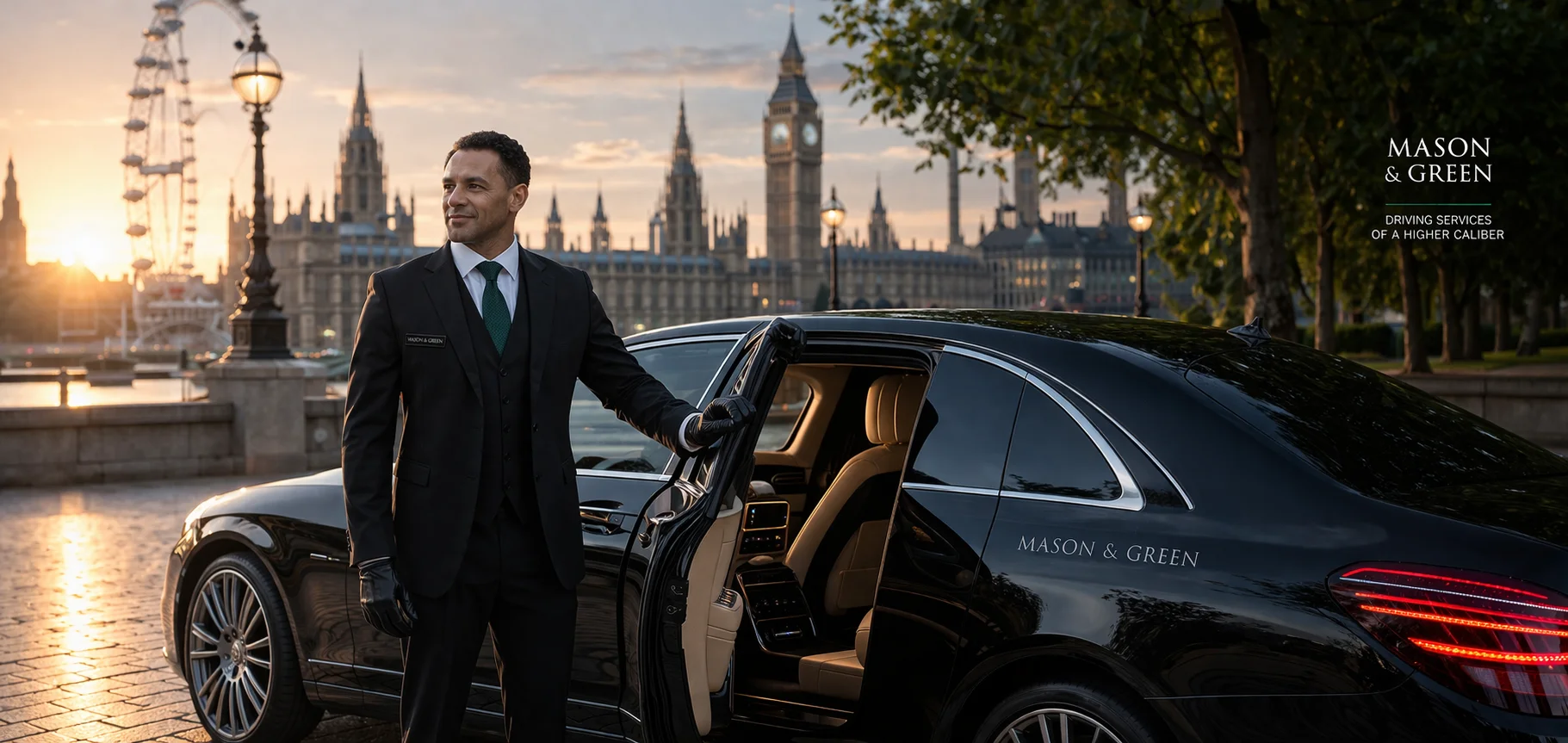
Can Mason & Green provide historic tours and transfers?
Yes. Mason & Green can provide private transport for historic day trips, London sightseeing, airport transfers, station journeys and multi-stop itineraries to places connected with English history.
Sources and Further Reading
This page was written as an accessible overview. For deeper reading and verification, useful sources include:
- English Heritage: History of Stonehenge
- English Heritage: 1066 and the Norman Conquest
- UK Parliament: The Evolution of Parliament
- UK Parliament: Act of Union 1707
- The Royal Family: The King
- GOV.UK: Prime Minister